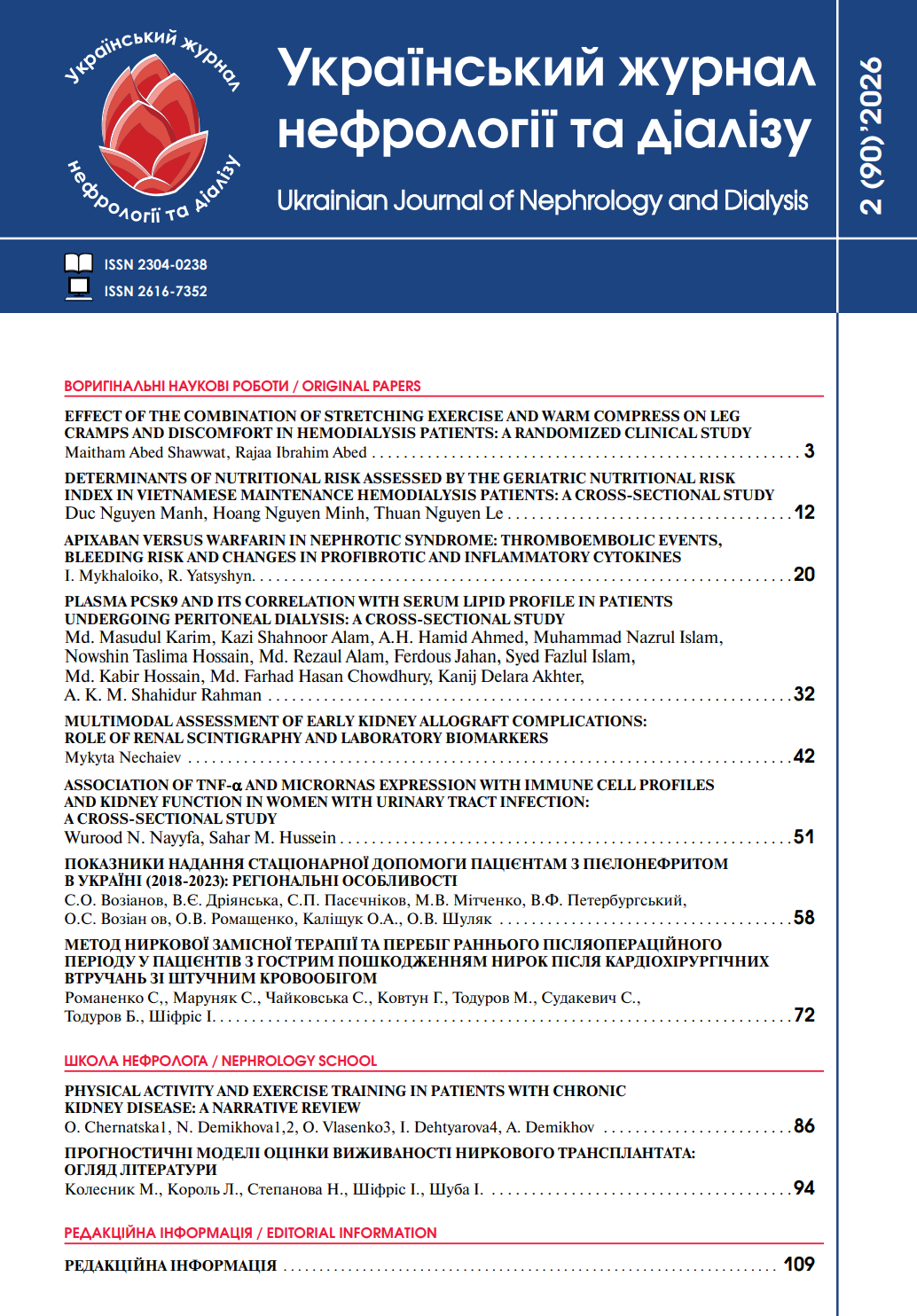
Predictive models for assessing kidney allograft survival: A narrative review
Abstract
This review aimed to provide a clinically oriented evaluation of predictive models, scores, indices, nomograms and online calculators used for kidney allograft function and graft survival.
Methods. A targeted search was performed in PubMed/MEDLINE, Scopus, Embase, Web of Science Core Collection, Cochrane Library and Google Scholar. Priority was given to original model-development and validation studies, clinically used calculators, consensus documents and reviews addressing applicability, calibration and limitations of prognostic tools.
Results. Predictive instruments are most useful when applied according to the clinical time point: donor and recipient indices before transplantation; early functional markers and delayed graft function calculators during the perioperative period; eGFR, proteinuria, biopsy and immunological markers during the first year; and composite or dynamic models after the first year.
Conclusions. No single calculator can replace clinical judgment. The most practical strategy is a stepwise risk-oriented approach combining simple routine markers with validated and dynamically updated models.
Downloads
References
Колесник М.О, Степанова Н.М., Король Л.В., Шифріс І.М., Вороняк О.С., Кропельницький В.О., Красюк. Е.К., Коваль Т.О., Чепур Н.В. Основи трансплантаційної нефрології К.: ТОВ « Поліграф Плюс», 2025.-252 с.:ил. ISBN 978-617-7903-27.6
Copyright (c) 2026 Ukrainian Journal of Nephrology and Dialysis

This work is licensed under a Creative Commons Attribution-ShareAlike 4.0 International License.


